The Project
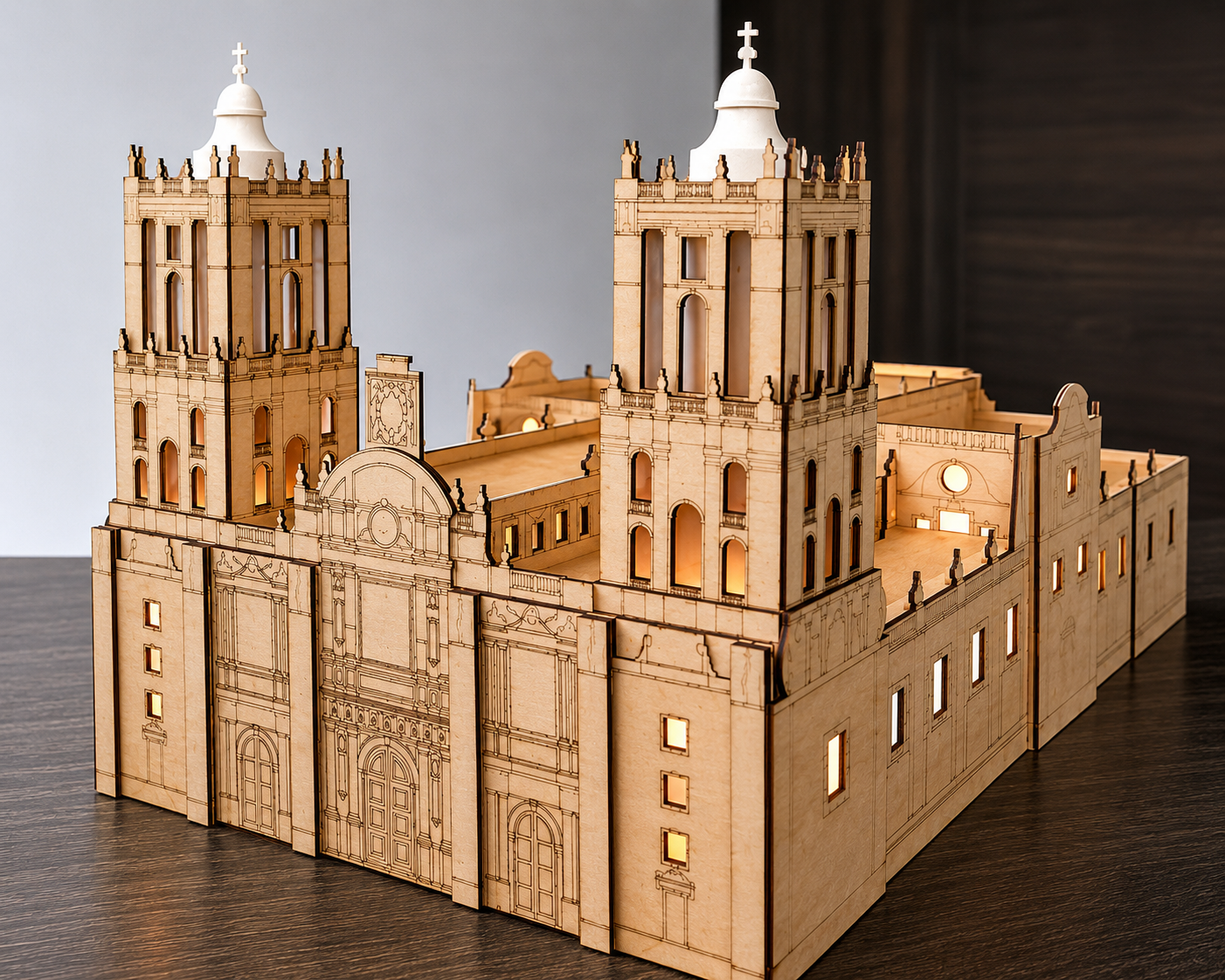
This project combined two things I wanted to understand: how to recreate a complex historic building as a physical model and why a structure of this size can experience settlement over time.
I modeled and assembled a detailed representation of the Metropolitan Cathedral while studying the unstable soil beneath it. That gave the project a deeper purpose than simply reproducing its appearance.
Studying the Architecture
The cathedral has many layers of detail, including towers, openings, columns, walls, and changes in elevation. Recreating every feature at full complexity would have made the model difficult to fabricate and assemble.
I had to decide which architectural elements were essential to the cathedral's identity and which ones could be simplified. The goal was to preserve its recognizable form while creating parts that could be cut, printed, and assembled accurately.
From CAD to Physical Model
Study the Building
Review the cathedral's overall form, proportions, towers, walls, openings, and important architectural details.
Develop the Digital Model
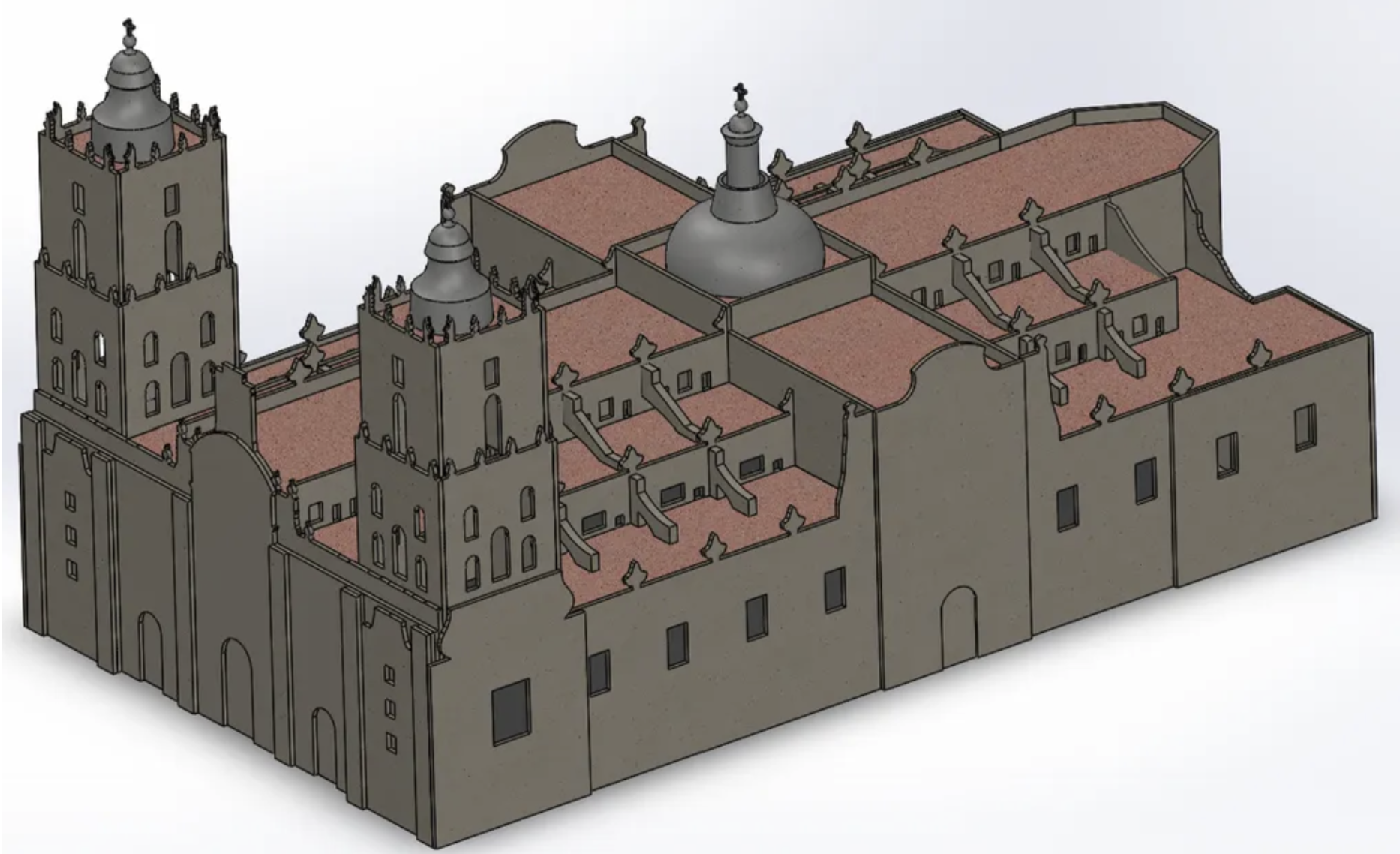
Recreate the structure in CAD and separate it into components that could be fabricated and assembled.
Prepare the Parts
Use SolidWorks, Onshape, and Adobe Illustrator to prepare geometry for laser cutting and 3D printing.
Fabricate the Components
Produce the walls, towers, decorative pieces, and supporting parts using the most suitable fabrication method for each component.
Assemble the Model
Fit the pieces together by hand, correct alignment issues, and complete the final architectural model.
The Foundation Problem
While researching the cathedral, I learned that its long-term movement is connected to the ground beneath it. A large and heavy structure does not always settle evenly, especially when it is supported by soft or inconsistent soil.
When one area settles more than another, the building can experience differential settlement. That movement can lead to tilting, cracking, distortion, and changes in how loads travel through the structure.
What Made This Interesting
The cathedral may look rigid and permanent, but its behavior is still influenced by slow changes in the soil below it. The project helped me see that structural performance depends on the ground as much as the building itself.
Understanding Subsidence
Compressible Soil
Soft ground can compress under the weight of a large structure, causing the foundation to move gradually over time.
Uneven Settlement
Different parts of the building may settle at different rates, creating distortion instead of uniform downward movement.
Changing Ground Conditions
Changes in moisture, groundwater, and surrounding soil conditions can influence how the ground supports the structure.
Long-Term Structural Effects
Continued movement can affect walls, towers, connections, finishes, and the overall alignment of the building.
Responding to Settlement
I also studied the types of approaches engineers can consider when a historic structure experiences uneven settlement. The right response depends on the soil, foundation system, rate of movement, and condition of the building.
Possible strategies can include monitoring the movement, improving or strengthening the foundation, transferring loads to more stable ground, and carefully correcting uneven elevations. For a historic building, every intervention must also protect the original structure and architectural character.
CAD Model
Digital Model
The CAD model was divided into manageable components so the cathedral's form could be recreated through laser cutting, 3D printing, and hand assembly.
What I Learned
Building the model taught me how much planning is required to turn a detailed digital design into a physical object. Small errors in scale, alignment, or part thickness could affect several pieces during assembly.
The research also introduced me to the connection between structural engineering and geotechnical conditions. Before this project, I mostly thought about the structure above ground. Learning about subsidence showed me how soil behavior can influence a building for decades or even centuries.
That combination made this project especially valuable to me. I was able to build something visually detailed while also learning about a real engineering problem hidden beneath the architecture.