The Idea
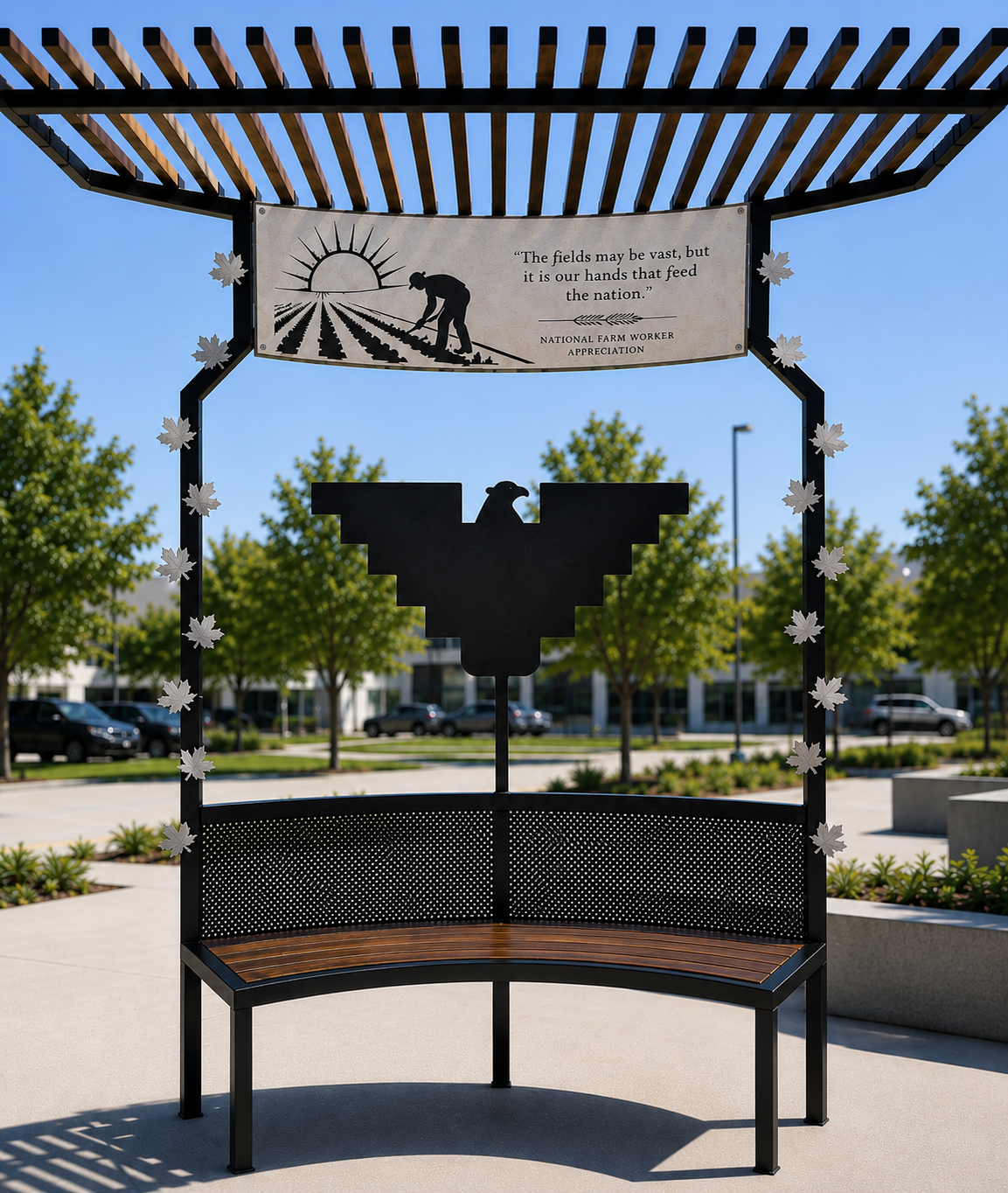
This project began with the idea of creating something that would honor farm workers in a physical and lasting way. We wanted the monument to feel more personal than a sign or plaque, so the design combined a symbolic centerpiece with a bench that people could sit beside and gather around.
The goal was to create a place for reflection while recognizing the labor and contributions of farm workers in the community.
My Role
I led a team of five throughout the design and fabrication process. My main responsibility was developing the CAD design, but I was also involved in material planning, cutting, welding, woodworking, assembly, and final installation.
As team leader, I helped divide the work, coordinate the different stages, and make sure that the steel frame, decorative pieces, and wooden seating came together as one finished structure.
Design Leadership
Developed the main CAD design and helped turn the original idea into dimensions, components, and a practical fabrication plan.
Team Coordination
Organized responsibilities across the five-person team and helped keep the design, fabrication, and assembly work moving together.
Hands-On Fabrication
Contributed throughout the build, including steel preparation, welding, woodworking, fitting, and final assembly.
Problem-Solving
Adjusted the production plan when equipment limitations prevented some decorative components from being made in-house.
Design Decisions
The central eagle became the main visual element of the monument. I developed the CAD design so it would remain recognizable from a distance while still being practical to cut and support within the steel frame.
The monument also needed to work as one complete structure. I had to consider the overall proportions, the spacing of the decorative pieces, the support for the bench, and how each part would be assembled with the tools and materials available.
More Than a Display Piece
Adding the bench changed the monument from something people would only look at into a place they could sit beside, gather around, and spend time with.
Building the Monument
Develop the CAD Design
Create the overall layout, frame geometry, seating arrangement, and decorative components before fabrication began.
Plan the Team's Work
Divide the project into steel fabrication, decorative cutting, woodworking, fitting, and assembly tasks.
Prepare the Steel Frame
Cut, fit, and weld the steel members while checking alignment, spacing, and overall stability.
Produce the Decorative Pieces
Cut the eagle and other steel details while working around the limitations of the available plasma-cutting equipment.
Build the Seating
Cut, finish, and install the wooden components that form the bench and complete the gathering space.
Complete the Final Assembly
Bring the steel and wood elements together, check the finished structure, and prepare the monument for display.
Adapting the Fabrication Plan
During fabrication, we found that the available plasma cutter could not produce the smaller leaf details accurately enough. Rather than removing those elements or accepting a poor result, I helped the team find another way to produce them.
We contacted a local manufacturing company, shared the required design files, and worked with them to have the leaves cut. This kept the original design intent while allowing the project to move forward despite the equipment limitation.
A Practical Leadership Lesson
Leading the project did not mean doing every task alone. It meant recognizing when the team needed outside support, communicating the design clearly, and keeping the project moving toward the final result.
Working as a Team
This project required the team to move between CAD work, metal fabrication, woodworking, and assembly. Because each stage depended on the others, communication was important. A small design change could affect cutting, welding, seating dimensions, or the final assembly order.
I tried to keep everyone involved in the larger goal rather than treating each task as an isolated assignment. That helped us make decisions together and solve problems without losing the meaning behind the monument.
What I Learned
This project taught me that leadership is as much about communication and adaptability as it is about technical ability. I had to explain the design, listen to the team's concerns, divide responsibilities, and adjust the plan when the original fabrication method did not work.
It also showed me how much a design changes once it moves from CAD into fabrication. Dimensions, connections, material thickness, available equipment, and assembly order all became more important once we started building.
The finished monument represents more than the work of one person. It was the result of five people combining different skills around one shared idea, and leading that process was one of the most valuable parts of the project for me.